From Kaiserslautern to Sayre - Part Three
- Robin Crane
- Jun 16
- 7 min read

Updated: Jul 5
🌳Chapter 5
Ray E. French, Service No. 25698199 Battery B, 4th Missile Battalion 6th Artillery, U.S. Army, Germany
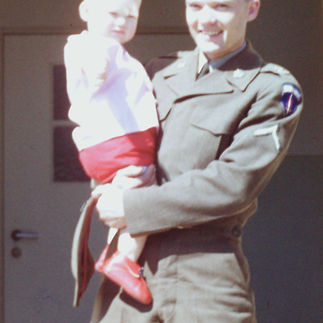
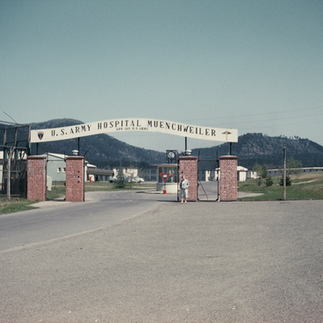
By 2025, at eighty-nine, Ray’s memories were thinning at the edges. Dates slipped away. Names sometimes stalled. When I asked him about Kaiserslautern, something changed. “I loved the Army,” he said, as if he had been waiting for someone to ask. He began by telling me about patrolling a forest unlike anything in Oklahoma—tall, dark, and endless. Ruins of old castles hid among the trees. It was the Palatinate Forest, where he spent nights on patrol, smoking as he walked, guarding the missiles he had trained on at Fort Bliss. The work was serious and constant. Protecting the missiles gave him purpose.

During the day, he could see a ski jump on a distant mountain, stark and white against the green hills—likely the Stegskopf ski jump, one of the largest in the region. On his time off, they wandered through small towns and crossed easily into France. He knew he wanted a career in the Army. This was the first time he’d experienced such a feeling of fitting in. His new friends were his Army brothers, enjoying a camaraderie he had never known with his biological brothers. They had routines, jokes, purpose—men who saw him and valued him; his first true brotherhood.
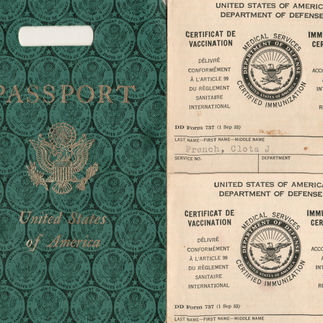
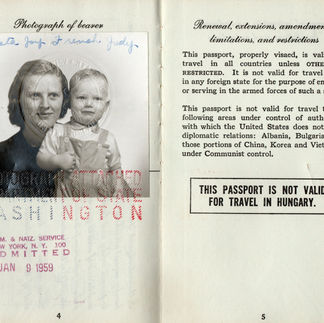
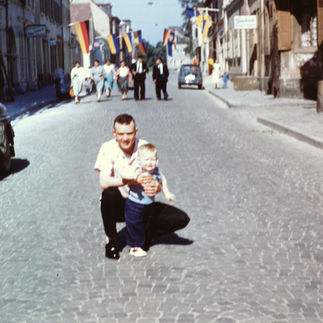
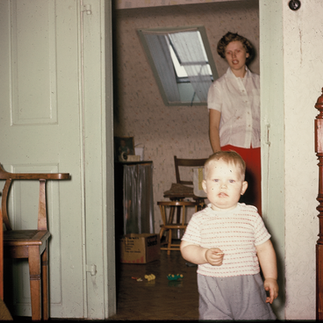
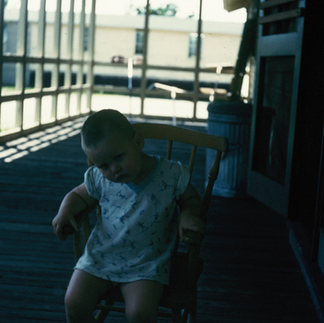
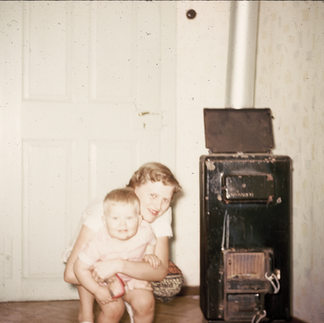
Then Joy brought baby Jody over, and everything shifted. They moved into married housing above an elderly German couple—Oma and Opa, Jody called them—and the baby began learning German before he even spoke English.
Joy spent her days alone in rooms that never quite warmed. Ray went off on patrol and returned animated with stories. She had only the baby, whose cries filled the hours while her voice went unused. The language on the street wasn’t hers. The neighbors were kind but distant. There was no one to talk to, no place to put her homesickness except back onto Ray. She cried that she was lonely, and it made him angry. Ray admitted he could have been kinder to her, but he had never wanted her to come.
After sixty years his body still tensed when he told me Germany had been his solution, and he planned to send money back home to her. When his voice tightened, I shifted him somewhere easier. I mentioned a documentary I had watched about Elvis. I remembered Elvis had met Priscilla while stationed in Germany, so I asked Ray about him. He smiled. Everyone knew Elvis was there, he said, but he never saw him—not once. Some soldiers did, but not him. They were told to treat Elvis like any other soldier—just another man in uniform doing his duty, except with better hair.
The humor faded as he looked past me. Then he said the baby got really sick. Ray folded his arms across his chest. He said he didn’t like to remember.
“Joy handled Jody. She always did. I was twenty-two. Not ready to be a dad. Especially not to a sick baby. Sleepless nights. Hospitals.”
He paused, as if the memory had returned with more weight than he had expected. Then he said he told Joy to go home and get the baby well. He would stay in Germany.
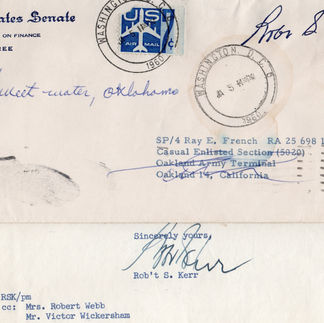
There was nothing else she could do. The news traveled back to Oklahoma. Ann Webb, Joy’s sister, launched a letter-writing campaign to Senator Robert S. Kerr and Representative Wickersham, urging them to bring baby Jody—and Joy—back to the States. The effort worked beyond anyone’s expectations. The Army granted Ray an early separation, cutting short his assignment in Germany.
Instead of relief, he was mad.
Joy and Jody could go home—that was fine. But he didn’t want to go. Being discharged felt like a forced failure. They can’t do this, he told himself. I didn’t ask for it. He called the personnel office. When he tried to argue, the answer came back flat. Orders were orders.
It all happened in quick beats. Joy shoved what she could into her old suitcase, and the Army deposited her and Jody on a plane home. Ray would follow them in a few months. Now the house felt as if it would swallow him. The baby’s toys lay motionless on the floor, and he had to step around Jody’s potty chair just to reach the shower. Their absence forced him to rethink every word he had said to Joy.
He finished his duty in Germany. It ended without ceremony. One day he was happy patrolling forest trails beneath dark pines, on duty as usual. The next day, he was packing his duffel bag. The Army—and the life he had imagined—was suddenly over.
As Ray spoke, I realized I had grown up surrounded by traces of this story in our family home. I thought about the Army-green wool blankets folded in the closets and the boots tucked away in the garage—things that had always been there, silent and unexplained. They were pieces of a life I came to understand only later. The Army-green presence in our home began back in high school, when Ray first joined the Guard.
Joy had once admired Ray’s black curly hair against the green of his Army Guard uniform. He stood out from the crowd. She found the way he thought about things more interesting and alive. He was always more curious than certain. She loved his silliness, the way he could make her laugh even in serious moments. It’s strange how the very things that draw you to someone can later break your heart.
In their rush to build a future, that ease between them began to change. She had not expected his sharp moods—the sudden outbursts, the way he told her he didn’t want to be married. “This isn’t fun anymore,” he said. His frustration at the hospital settled on her, even as she carried the full responsibility of caring for a sick baby. The doctor’s appointments. The long nights. Every decision fell to her—not because she was ready, but because there was no one else to take it on. She was being exactly who he had married. Responsibility did not lighten with time. It narrowed until everything rested on Joy—every test strip, every injection, every night without sleep.
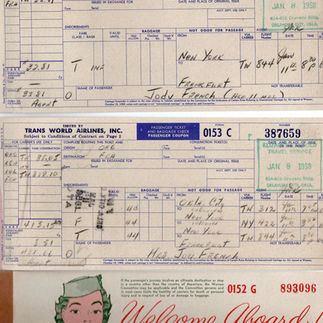
Three hundred sixty-three days after their arrival in Germany, Joy and baby Jody were on a flight back to the United States. Jody’s blood sugars were wildly unpredictable. On the flight, Joy pressed the test strip into a damp diaper, the sweet smell rising, and squinted at the color chart—nothing matched. She tried a second strip. Different again. Her hands shook as she measured the insulin. Every injection carried a weight she couldn’t measure. Every poke was a risk—too much, too little?
The entire flight from Frankfurt, she held Jody tight. She watched his color, checked his temperature, and even lifted him close, trying to read his scent for signs of his blood sugar. She prayed the whole way, too afraid to sleep. Her arms ached, but she did not loosen her hold.
The Army had only paid for a flight to New York. From there, she boarded a bus for the long ride home. Mile after mile, the road stretched on. With every turn, fear and exhaustion weakened her muscles. The smell of diesel made her stomach turn. The rattling bus shook her bones. She could keep going only because each mile brought her one step closer to home.
By the time they reached the four-way stop in Sweetwater, she was on the verge of collapse. There were her parents—Joe standing tall, Maggie clutching her purse. Relief hit her like a wave. Normally a Killingsworth never cried in front of others, but that day, with her arms trembling and too tired to hold Jody, she lifted the baby to her Daddy and sank into her mother’s arms, breathing in the warm, familiar scent of her mother’s coat. Everything she had carried for the last year came home with her.
Maggie took care of Joy so Joy could take care of Jody. Once she was cared for, Jody improved. With so many extra eyes on him, Joy could finally sleep—something she hadn’t done in months.
Ray returned from Germany and rented them a small house in Sayre, but she didn’t move in with him. Not right away. Her mother and daddy said she could stay with them as long as she wanted, and Jody was doing so well.
To finish his military obligation, Ray rejoined his Guard unit and took a job digging ditches. The work was hot, muddy, and backbreaking—nothing like the sense of importance he had felt overseas standing watch over missiles. Every morning he laced his boots for another day of labor.
Losing his Army career hurt, but nothing like the gut punch he felt after his wife and baby flew five thousand miles away from him. He turned his duty from the Army back to his family. The Army oath he had lived by—never accepting defeat, never leaving a fallen comrade—became the way he approached being a husband and father. Joy and Jody moved in with him.
Those first years of their marriage passed in a blur—wedding, move to the city, pregnancy, Jody’s birth, Germany, and repeated separations—hardships that might have broken weaker people. What held them together was duty, more than tenderness—a commitment neither of them abandoned. Every time Joy looked at her ring, she remembered the boy who plowed cotton for her, the man he had become, and the endless ditches he dug to carry them through—something neither distance nor frustration had broken.
Living in Sayre offered no answers, only the slow rhythm of life and labor. They talked about moving back to the city, finding opportunity, starting over—just as plans took shape, Joy discovered she was pregnant again. Ray faced the news as he faced most things in Sayre: with a shovel in one hand, mud caking his boots, and a long, weary sigh. They could only laugh at the timing. The city move would come, eventually, but for now they leaned on each other, sharing the exasperation of life squeezed into their half-house at 406½ N. 4th Street, Sayre, Oklahoma.
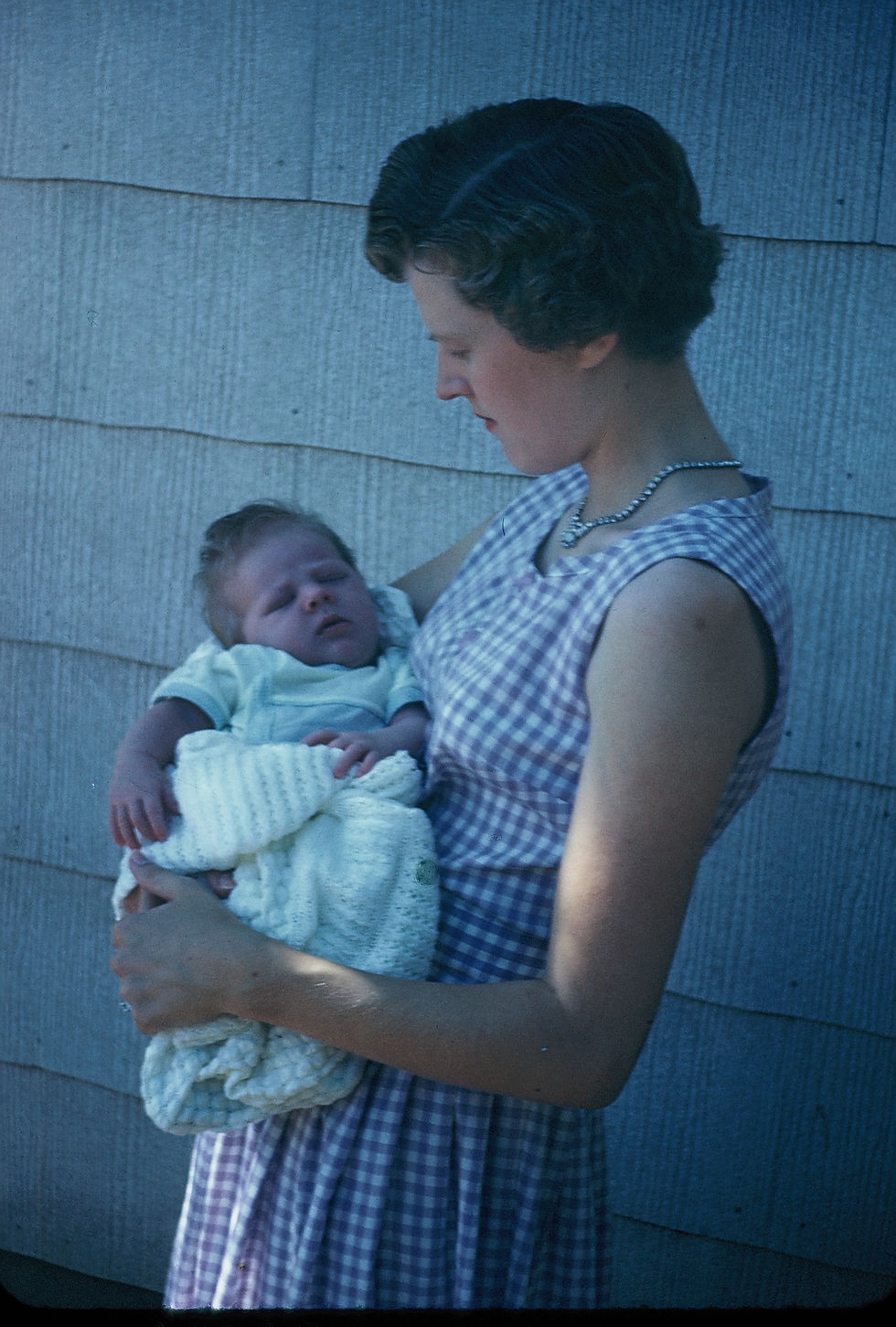
Mark, their new baby, brought laughter back into their lives—the wild movement of his hair, his lopsided smile, the sweet little coos that filled the house. Jody, now three, remained a challenge. His diabetes was a constant, around-the-clock task, made harder by limited resources. Slowly, through careful trial and error, they learned his signals—the slight tremor, the dip in energy, the way he paused before reaching for food. Each small success brought confidence, a gentle easing of the tension that had once filled their home.
By 1961, the family of four packed up and moved to Oklahoma City for a second chance, leaving behind the mud, the trenches, and the weary sighs of Sayre. Better days were ahead, and they stepped into the new chapter together, carrying both the lessons and the laughter of the years behind them.
From the Family Archive




























Comments