Why Ray? Why?

Updated: Aug 21
Chapter 6
1960, Oklahoma City ~ Again
Joy gripped the car seat, her stomach twisting. She never imagined calling the city home again. She had lived here as a teenage wife, with nothing but youth and blind faith. Whatever waited now, she would face it as a mother of two boys.
This time, the city felt different. The air was warmer, the streetlights brighter than she remembered. Ray had secured employment before the move, easing one worry for the family. Unable to be a full-time soldier, he stayed in the National Guard while taking civilian work at Tinker Air Force Base. He started at a desk, done with digging ditches and fielding cotton. Evenings, he attended night school, working toward his journeyman electrician’s license.
Their housing situation improved when they purchased their first home on SW 20th Street, and they immediately found a sense of belonging at Southwest Friendship Baptist Church. Money remained tight, but the strain eased. The first time they had tried city life, they had been 18 and 20—just out of high school. Now, after the Army and time in Sayre, they were 22 and 24—adults ready for new responsibilities.
Adulthood brought opportunities. Joy discovered a way to channel her creativity into something that helped support the family. Along with looking after the boys, she began doing women’s hair for members of their church. Her skill and reputation grew quickly, prompting her to enroll in cosmetology school. She graduated from Capitol Hill Beauty School in March 1962. Ray transformed the space that had once housed the family station wagon into a salon. Almost immediately, the haze of perm solution and Aqua Net filled the air, buzzing with the energy of a new business—Joy French Beauty Salon was born.

A row of women sat beneath hooded dryers. Their voices rose and fell over the hum—church news, sick mothers, a neighbor who might be pregnant again. Joy moved among them, rolling hair and adjusting timers, listening more than she spoke, attuned to the rhythm of the room. “Don’t tell anyone I told you,” one woman whispered, leaning close as Joy pinned a curl into place. Joy nodded, hands steady, eyes kind. She never repeated what was said in her chair. That was why the women kept coming back—why they trusted her with their hair and with pieces of their lives. By the time the dryers clicked off, the beehives stood tall, the gossip settled, and everyone left feeling lighter than when they arrived.
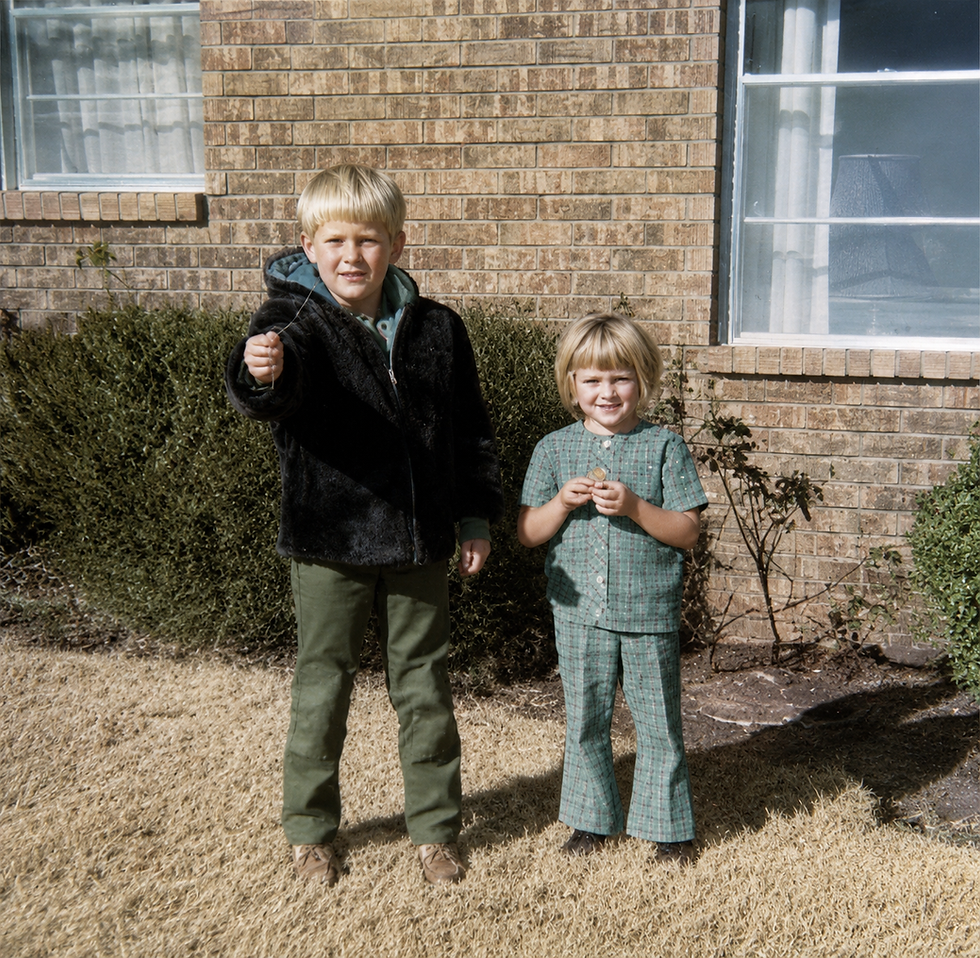
Jody started school at Rockwood Elementary. His health was still delicate but managed. Mark—always full of energy—kept everyone on their toes. He was such a rough‑and‑tumble kid that, instead of rushing him to the ER for every injury, the adults just taped him up like an old football player, laughing at how tough he was.

Weekdays followed a comfortable rhythm: work and school. Evenings brought the smell of family dinner and boy energy spilling through the house. Weekends were for cookouts and domino games. Smoke from the grill curled around the back porch, where the family had set up the dominoes. The clatter of tiles being shuffled over the card table rose above the boys’ laughter. For a little while, everything felt just right.
Ray balanced work at Tinker, night school, and coaching the boys’ baseball practices. At church, he became a deacon and helped with services. One weekend each month belonged to the Army. When he returned, a confidence clung to him—a posture she had seen before, in Germany.
At home, he paused at the door, unbuttoned his fatigues, and unlaced his boots. It took a moment to shed the soldier’s focus and step into dad mode, but soon he was bending to check scraped knees, tossing a ball across the yard, laughing at something small and ordinary. Still, he wasn’t entirely there. The boys were her world, and his too, and it hurt to feel he carried a restless need no one—neither her nor the boys—could ever satisfy. Even in the most perfect family moments, that tension pressed against her.
One afternoon, Joy drove their station wagon, the boys loose and loud in the back seat. Patsy Cline’s Your Cheatin’ Heart came on the radio, and she reached inside the glove compartment for a napkin. A folded slip of paper slid out, landing face up on the vinyl seat. She didn’t pick it up immediately. Her eyes stayed on the road, foot steady on the gas, the song filling the space between her and that paper. When she finally reached for it, her fingers fumbled. The paper was warm from the sun, creased once, then again. A restaurant name she didn’t recognize. A date from the week before. Joy pressed the receipt flat against her thigh, folding it smaller and tighter until it seemed to melt into her palm. She already knew what it meant. The song’s words hung in the car with her. She swallowed and forced a smile into the rearview mirror. “Settle down back there,” she said, surprised at the steadiness of her own voice.

At the next stoplight, she whispered a prayer she had said many times before: Please help me carry this without it breaking me. She tucked the receipt into the glove compartment, closed it, and drove the rest of the way in silence, holding herself together until she could fall apart somewhere no one would see.
That long-ago car ride was over sixty years ago. When I asked Ray about his extramarital activities, he still thinks he was sneaky and that nobody knew. Well, everybody knew. But this was still a time when people kept their mouths shut. Minded their own business. You could call Joy weak for putting up with it, or strong for holding it together.
In the years that followed, Joy prayed, forgave, and learned to let the past live its own shadowed life between them. Ray promised to be faithful, and another baby came. (Me, January 1, 1966.) Though the garage had been converted years before into Joy’s salon, he worked in a tiny leftover corner, surrounded by tools and spools of conduit. Every wire he twisted, every tool he lifted, bore the weight of his determination to build something lasting.
Ray stayed. He took care of his family. Even when he longed for something else—weekends hunting, the freedom of single life—he stayed. Like a soldier who never quite stood down, he worked relentlessly, stacking one job on top of another. When the post office hired him as a mail carrier, he kept French Electric going on the side. He showed up. He provided. That became his proof of love.
But at unexpected moments, he drifted to the edges of rooms, unreachable. He snapped at small things, slammed doors, or disappeared for hours without explanation. The house seemed to hold its breath when that happened. She never knew exactly what shadowed him—only that her life would be on hold until it passed. And when it did, he was always sorry.

Ray’s failures came in waves—unpredictable and relentless—but her response never wavered. She practiced forgiveness the way some people practice survival: not as a feeling, but as a decision made again and again, for her children and for the life she was determined to hold together.
Because neither of them walked away—because, despite everything, they believed there was something worth saving—they finally reached what they would later call the best time of their lives: right after my birth, with Ray coaching the boys’ baseball team. Their marriage was eleven years old. Supper dishes dried in the rack, uniforms hung over the backs of chairs, and for a little while, the soldier laid down his guard. The house no longer held its breath. For a season, it was safe ground—long enough to believe it might last.
Comments